POST-INFLAMMATORY ERYTHEMA AND HOW TO HELP IT FADE
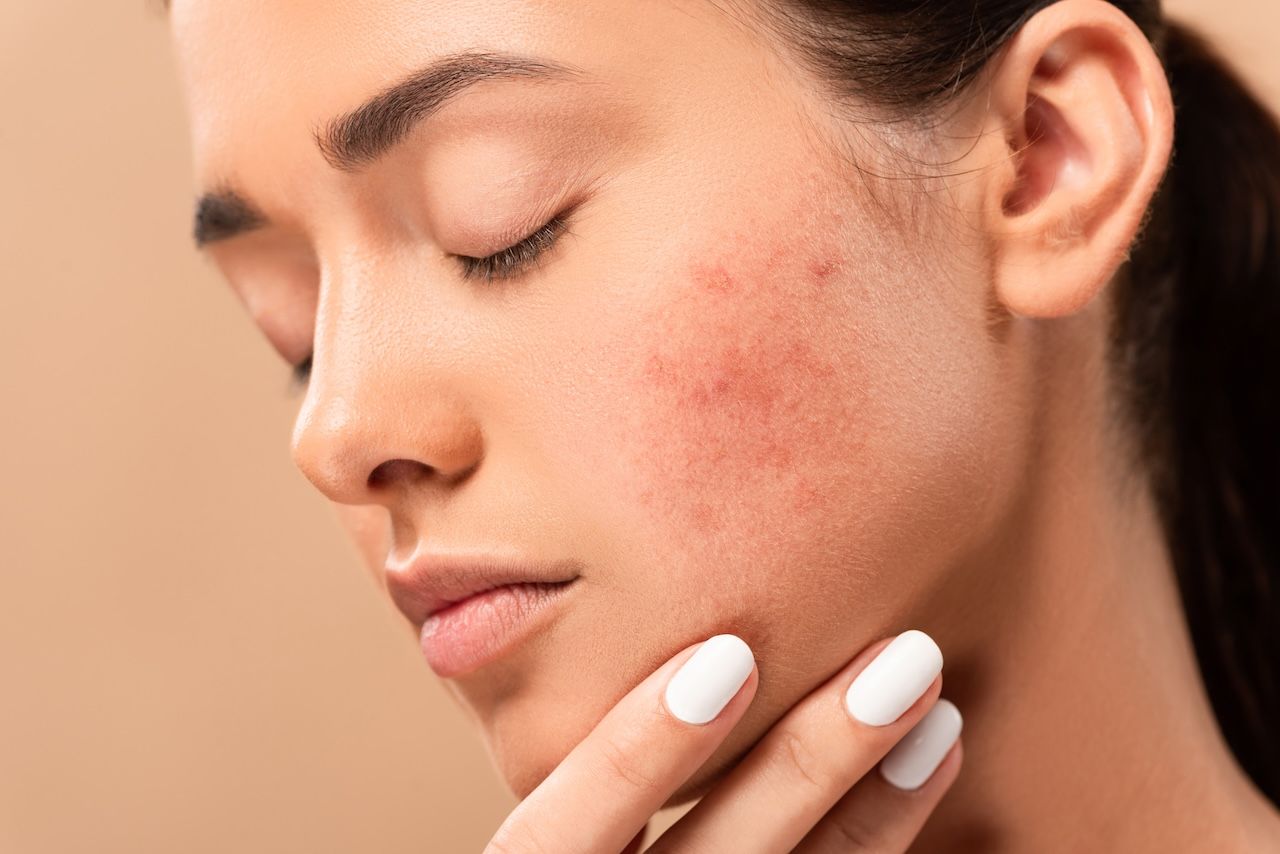
Your clients might ask why a mark sticks around long after a breakout clears. In many cases, that mark is post-inflammatory erythema. Understanding why this occurs will help you set realistic expectations and build the right plan for each client's skin.
WHAT IS POST-INFLAMMATORY ERYTHEMA?
Post-inflammatory erythema is a temporary vascular mark that forms after an acne lesion resolves. It lies flat against the skin and reflects lingering blood vessel activity rather than a change in texture.
In fairer skin tones, PIE usually looks pink or red. In deeper skin tones, it may appear red-brown, purple or barely visible, since erythema is harder to spot against more melanin-rich skin.
WHAT'S THE DIFFERENCE BETWEEN PIE AND ACNE SCARRING?
PIE and acne scarring might look similar at first glance, but the skin's structure itself remains intact when PIE is present. True acne scarring, on the other hand, occurs when the dermis is physically disrupted. Fibroblasts rush in to repair the damage, but the collagen they produce is often disorganized, leading to the indentations or raised tissue associated with scarring.
This distinction matters because PIE tends to improve with ingredients that calm inflammation and support vascular repair, whereas acne scarring doesn’t respond because it is rooted in deeper structural changes. It typically requires approaches that stimulate collagen remodeling, such as retinoids, resurfacing treatments or microneedling.
WHAT CAUSES POST-INFLAMMATORY ERYTHEMA?
When an acne lesion becomes inflamed, the body sends extra blood flow to the area to fight bacteria and clear debris. This process leads to:
- Vasodilation or widening of the superficial blood vessels
- Increased visibility of those vessels through the skin
- Persistent local inflammation as the area recovers
- Vascular remodeling as the lesion resolves
The more severe or prolonged an inflammatory acne lesion is, the more likely PIE will linger. Deep, cystic breakouts trigger a stronger vascular response, which can take weeks or months to settle on its own.
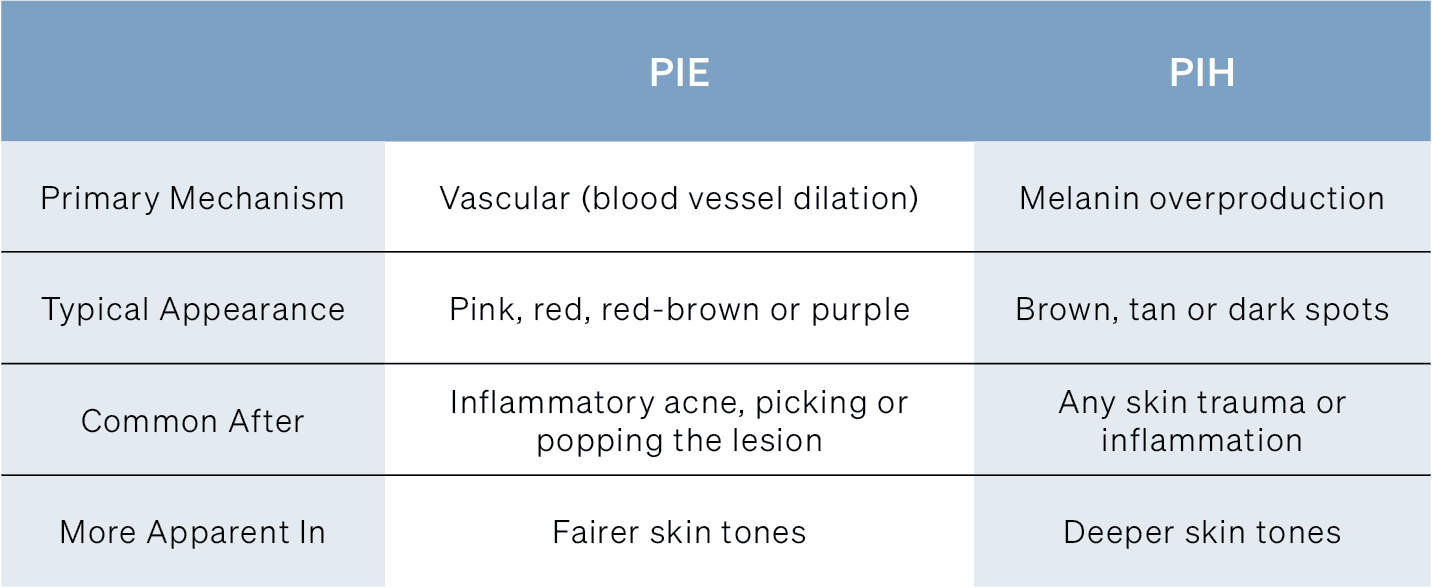
PIE VS PIH: HOW CAN YOU TELL THE DIFFERENCE?
PIE and post-inflammatory hyperpigmentation (PIH) are often confused, but they come from different processes. PIE involves blood vessels, while PIH involves excess melanin.
A quick way to check is to gently stretch the skin. If the mark temporarily lightens, or blanches, you're likely looking at PIE. If the color stays the same, it’s more likely PIH.

CAN CLIENTS HAVE PIE AND PIH AT THE SAME TIME?
Yes. A client can experience active acne, PIE, PIH and true acne scarring all at once, especially with a history of picking or prolonged breakouts.
This is exactly why a thorough assessment matters. Addressing every mark the same way, without identifying whether it's vascular or pigment-based, can leave your client's home care plan falling short of their expectations.
HOW SHOULD SKINCARE PROFESSIONALS ASSESS PIE?
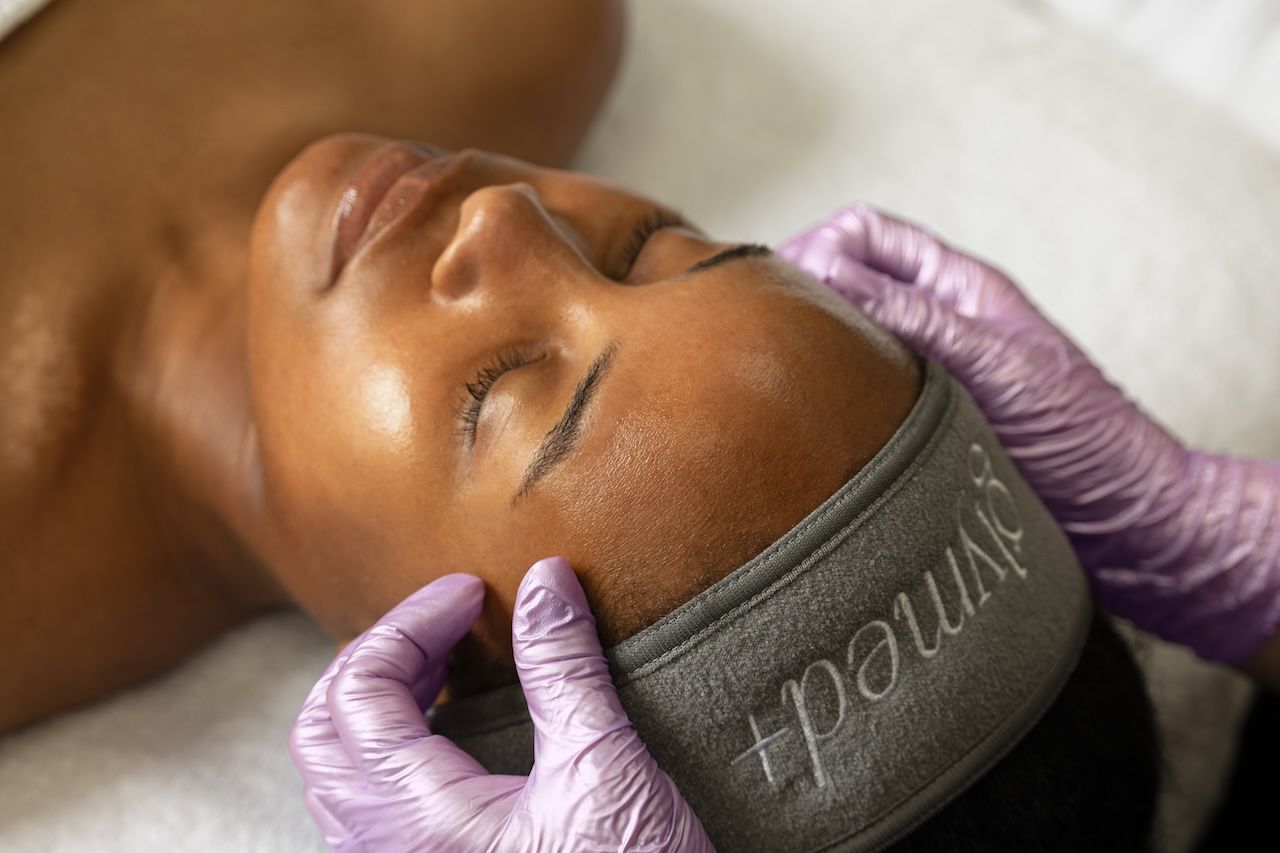
A structured assessment helps you build the right plan for each client. Start with these steps:
1. START WITH A DETAILED HISTORY
Ask how long the mark has been present, whether it followed a specific breakout and what products the client has already tried.
2. ASSESS COLOR AND DISTRIBUTION
Note the color carefully, since, as mentioned, PIE typically presents as pink, red or purple, while PIH tends toward brown or tan. Consider how the marks are distributed across the face, as well; clusters may point to a history of inflammatory acne, while isolated marks may follow individual lesions.
3. DIFFERENTIATE FLAT DISCOLORATION FROM TRUE SCARRING
Run your fingers gently over the area. Note whether the mark is flat or has any accompanying texture change. Flat discoloration usually indicates PIE or PIH, while indented or raised areas suggest scarring.
4. CONSIDER THE CLIENT'S FITZPATRICK PHOTOTYPE
Erythema presents differently across skin tones, so factor phototype into your visual assessment rather than relying on redness alone.
5. USE DERMOSCOPY WHEN AVAILABLE
Dermoscopy can help you visualize vascular features more clearly, giving you extra confidence in your findings.
WHAT INGREDIENTS CAN HELP REDUCE THE APPEARANCE OF PIE?
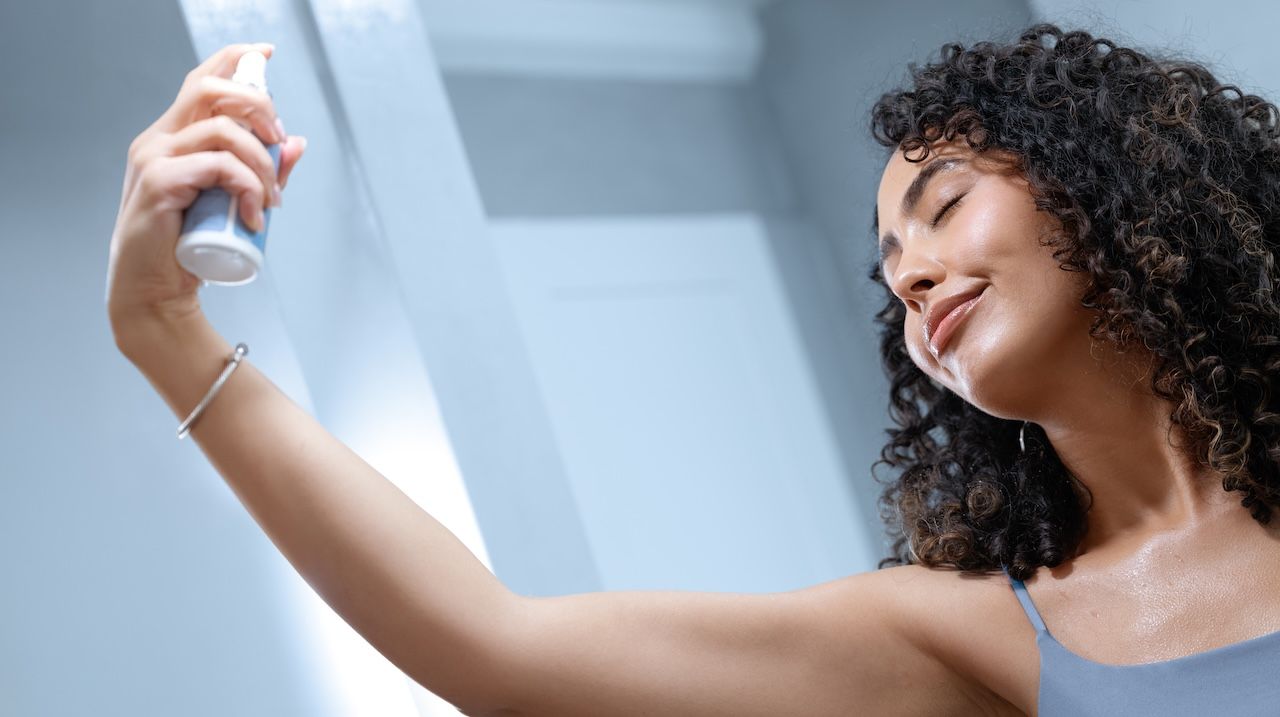
Certain ingredients calm inflammation and support the skin's barrier, both of which help fade PIE over time.
- Niacinamide: Try GlyMed's CBD Skin Mist to calm redness and support barrier function
- Antioxidants: Our Daily Skin Clarifier can balance uneven skin tone and reduce visible discoloration.
- Vitamin C: GlyMed's Vitamin C Serum or Vitamin C Cream brightens while supporting collagen health
- Barrier-Supportive Ingredients: Ceramides and peptides, like those in GlyMed's Barrier Repair Cream With Amino Acids, strengthen the skin's protective layer
WHICH INGREDIENTS SHOULD YOU USE CAREFULLY?
Some ingredients that help acne-prone skin overall can aggravate PIE if overused.
- Glycolic Acid: A powerful exfoliant, but it can strip the skin's barrier and trigger further inflammation, making redness more persistent.
- Lactic Acid: While gentler than Glycolic Acid, overuse can still disrupt the skin's barrier and aggravate existing PIE.
- Salicylic Acid: Great for targeting breakouts, but too much can dry out and irritate the skin, prolonging the appearance of redness.
- Retinol: A skin-renewing powerhouse, but it can cause initial irritation and sensitivity that worsens PIE if introduced too quickly.
- Scrubs: Physical exfoliants can create micro-tears in the skin, increasing inflammation and making post-acne redness harder to fade.
- Multiple exfoliating products at once: Layering exfoliants overwhelms the skin, compromising its barrier and creating the kind of irritation that keeps PIE lingering longer than it needs to.
Introduce these gradually and avoid layering several exfoliants together, so you don't add irritation that can prolong redness.
WHY DOES SUN PROTECTION MATTER?
UV exposure keeps inflammation active and makes post-acne discoloration, including post-inflammatory erythema, more noticeable. That’s why daily sun protection is non-negotiable; it supports every other step of your client's plan.
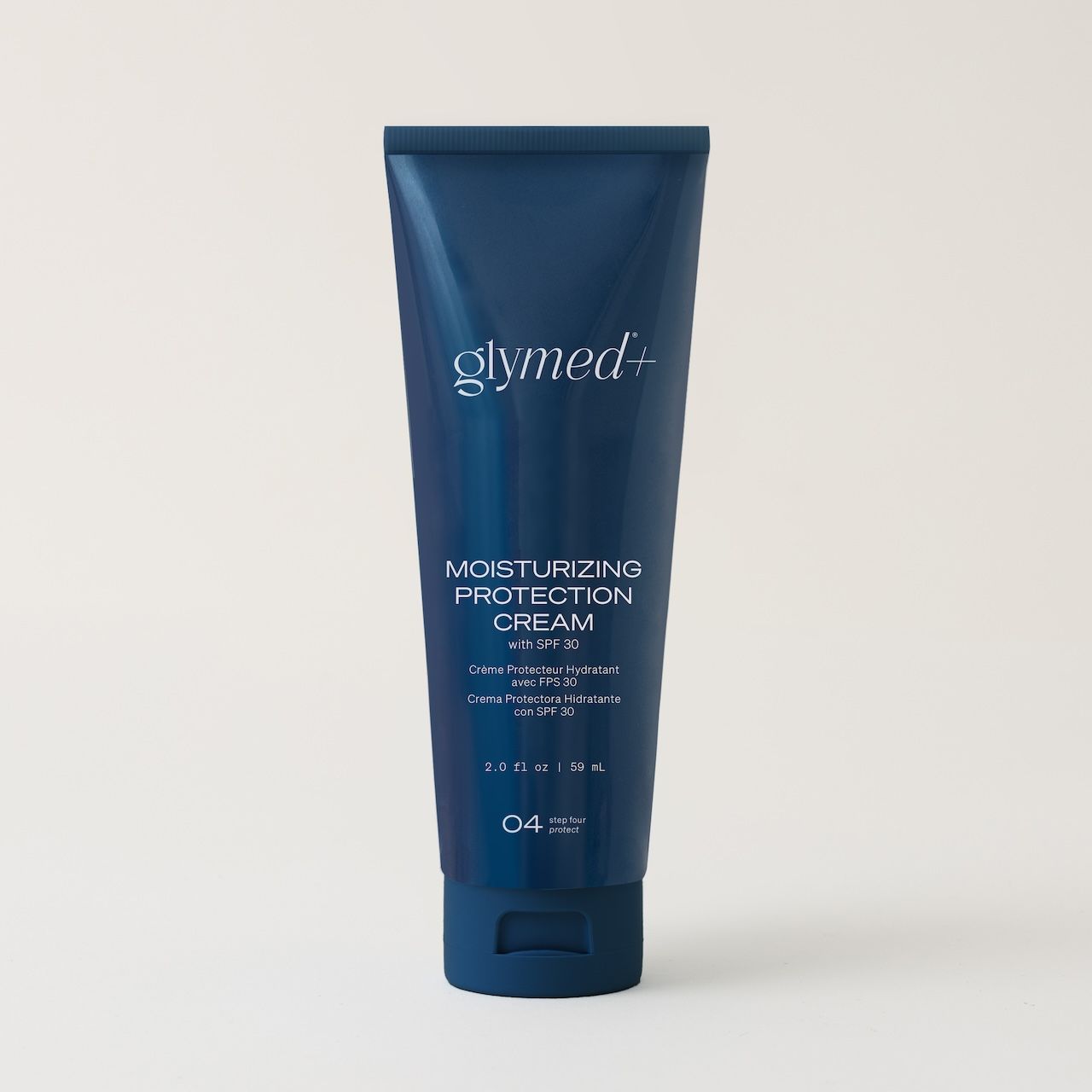
Additionally, many acne-focused and exfoliating ingredients increase photosensitivity. Recommend GlyMed's Moisturizing Protection Cream with SPF 30 as part of every client's daily routine.
WHICH PROFESSIONAL MODALITIES CAN REDUCE POST-ACNE ERYTHEMA?
In-clinic support can speed up results for stubborn cases:
- Vascular Lasers: Target dilated blood vessels directly to reduce visible redness
- IPL: Broad-spectrum light therapy that helps even out redness over a series of sessions
- Microneedling and Other Modalities: Supports overall skin renewal, helping fade lingering marks over time
TAKE YOUR SKINCARE EXPERTISE FURTHER AS A GLYMED+ PRO
Understanding the difference between vascular and pigment-based discoloration is exactly the kind of clinical insight that sets estheticians apart. The more confidently you assess and address post-acne skin, the more trust you build with every client.
If you're ready to take your understanding of post-acne skin conditions like PIE and PIH even further, become a GlyMed+ Pro. You'll gain access to advanced clinical education, professional-grade products and the ongoing support you need to confidently assess and manage even the most complex post-acne concerns.
FREQUENTLY ASKED QUESTIONS
IS POST-INFLAMMATORY ERYTHEMA PERMANENT?
No, PIE is not permanent. It typically fades within a few months as the vascular response settles. Consistent sun protection paired with calming ingredients can help speed up the process.
CAN POST-INFLAMMATORY ERYTHEMA TURN INTO HYPERPIGMENTATION?
PIE itself doesn't turn into PIH, but both can develop from the same breakout. This happens because inflammation can trigger a vascular response and excess melanin production at the same time, particularly in more melanin-rich skin.
If you notice both PIE and PIH developing, incorporate brightening ingredients like Vitamin C or Niacinamide into your routine to gradually fade dark spots while calming residual redness at the same time.
HOW CAN YOU TELL PIE FROM AN ACNE SCAR?
PIE is flat and doesn't change the skin's texture, while a scar involves an indentation or raised area. Gently running your fingers over the area during your assessment helps you tell the two apart.
CAN RETINOL MAKE POST-INFLAMMATORY ERYTHEMA WORSE?
Yes, Retinol can temporarily worsen the appearance of PIE if introduced too quickly. Starting with a lower frequency and building tolerance gradually helps minimize irritation and keep redness in check.
BECOME A GLYMED+ PROFESSIONAL
Like this content? Thousands of licensed skincare professionals have discovered the benefits of becoming a GlyMed+ Pro. Now's the time to join an elite group of estheticians dedicated to providing the best skincare services using the most effective products.
Click below to begin your GlyMed+ partnership and take your skincare business to new heights!
Become a ProSUPPORTING SKINCARE PROFESSIONALS
All GlyMed+ products are sold through licensed professionals to ensure product integrity and proper skincare instruction. As you work with a GlyMed+ Professional, you’ll receive personalized skincare treatments and home care regimens to help you achieve your skin goals.
Contact Your Local GlyMed+ ProFOLLOW US @GLYMEDPLUS
STAY CONNECTED
Enter your email to get the latest news, tips and deals straight to your inbox