
BREAKOUT ZONES: WHAT THE LOCATION OF YOUR ACNE REALLY MEANS
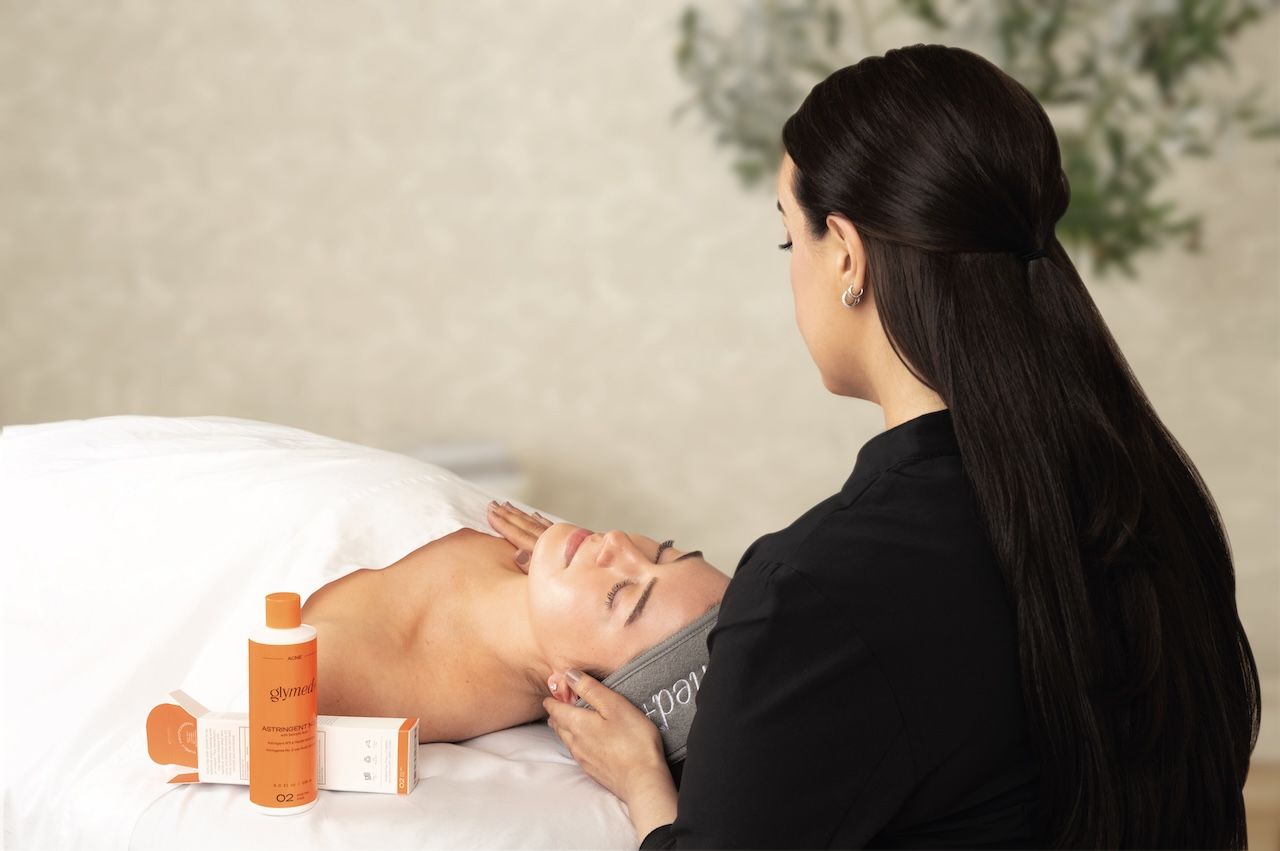
You've probably heard of the acne face map: the idea that breakouts in specific zones reveal what's happening inside the body. While it's true that location can give you a clue during your assessment, the reality is a bit more nuanced than "forehead = digestive issues."
Acne is multifactorial. The acne face map is a useful starting point, but it's only one piece of a much bigger picture. Here's how to use breakout location thoughtfully—and which GlyMed+ products can support each pattern.
BREAKOUT LOCATION DOES NOT ALLOW YOU TO DIAGNOSE AN INTERNAL CONDITION
Location can't tell you what's happening systemically. What it can do is help you narrow down potential external contributors, which is genuinely valuable in an acne consultation.
Think of the acne face map as one piece of the assessment. Before you start drawing conclusions, also consider:
- What type of lesions are present: comedones (clogged pores), papules (small, raised bumps), pustules (pus-filled lesions), nodules or cysts (deeper, more inflamed lesions)
- When they appear
- What contacts that area regularly
- Whether the pattern changes with the menstrual cycle, stress, exercise or product use
FOREHEAD AND HAIRLINE BREAKOUTS
Start with hair, oil and occlusion
Forehead congestion usually appears as closed comedones (bumps under the skin without a visible opening), small textured bumps or inflammatory lesions. The forehead is actually one of the most congestion-prone areas on the face. It has a high density of sebaceous (oil) glands and is constantly in contact with hair products, fabric and sweat, all of which can clog pores and trigger breakouts over time.
POSSIBLE CONTRIBUTORS
- Hair oils, pomades, leave-in conditioners and styling products
- Bangs or oily hair resting against the forehead
- Hats, helmets and headbands
- Sweat and occlusion
- Makeup or sunscreen products
CHEEK BREAKOUTS

Look at what is touching the skin
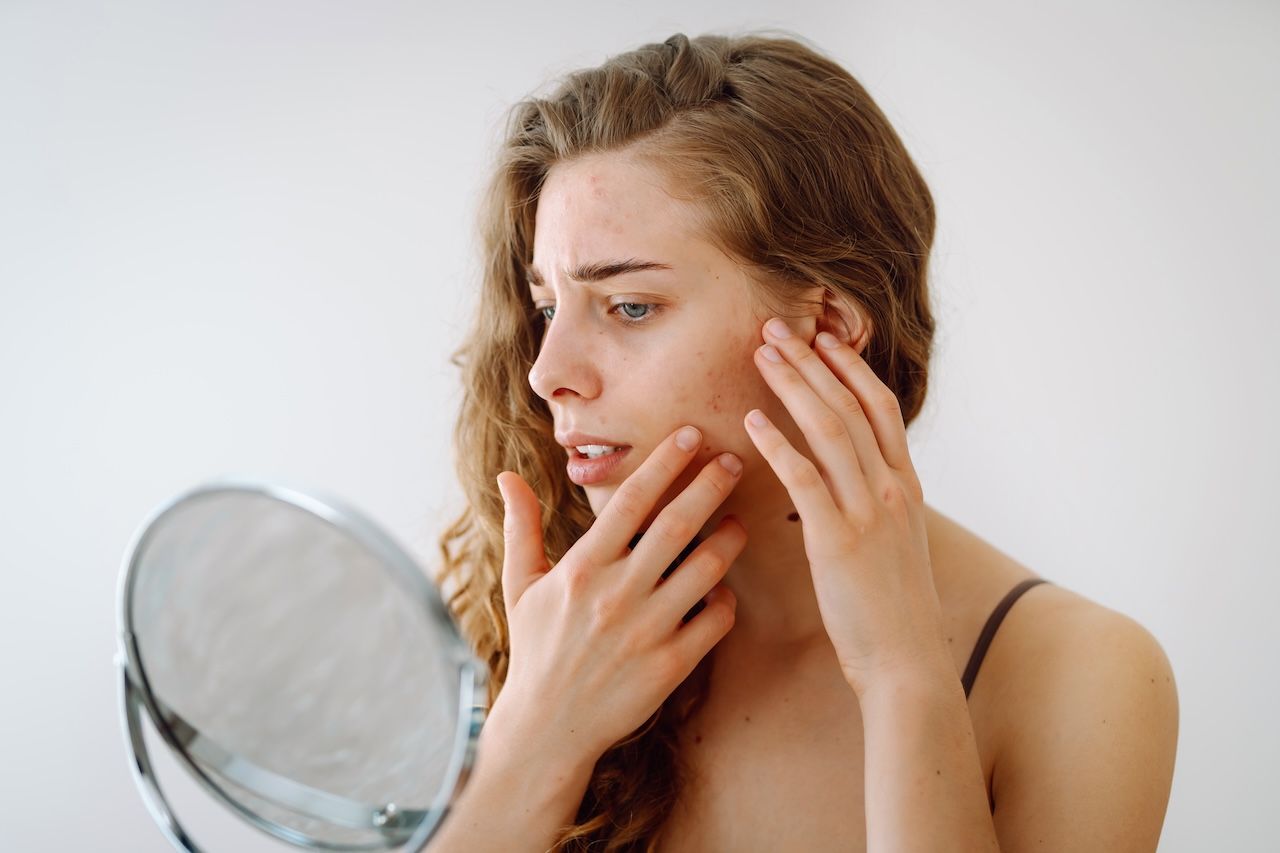
Cheek acne can look like anything from scattered closed comedones to inflammatory papules and pustules. Friction, heat and occlusion are commonly overlooked contributors in this zone, and they don't always get the attention they deserve. Look for patterns of exposure before assigning an internal explanation.
It's also worth noting that inflammatory skin conditions like rosacea can trigger or worsen breakouts in this area, so if your cheek acne feels more like persistent redness or sensitivity than typical spots, that could be worth exploring with a dermatologist.
POSSIBLE CONTRIBUTORS
- Phones, makeup and makeup brushes, pillowcases, hands resting against the face, helmets, straps or masks
- Hair products transferring onto the cheeks throughout the day
- Makeup, particularly when products clog pores or applicators aren't cleaned regularly
NOSE AND T-ZONE BREAKOUTS
Consider sebum and congestion
The central part of the acne face map tends to produce more oil than other areas due to a higher concentration of sebaceous glands. This makes the nose and T-zone particularly prone to congestion.
It's also worth differentiating between actual breakouts and sebaceous filaments—the small, grayish dots that are a normal part of pore structure and are often mistaken for blackheads. True blackheads (open comedones) have an oxidized, darker appearance, while closed comedones are flesh-toned bumps and inflamed lesions are red and raised.
POSSIBLE CONTRIBUTORS
- Excess oil production
- Dead skin cell buildup
- Product residue
- Overly occlusive products blocking the pore
CHIN AND JAWLINE BREAKOUTS
When hormones may be part of the picture
If you're seeing recurring breakouts along the chin and jawline, hormones might be your go-to, and in many cases, that instinct is right. This pattern is one of the most tell-tale signs of hormonal acne, especially when breakouts seem to follow a predictable cycle and the lesions are deep, tender or inflammatory.
That said, it's always worth ruling out contact irritants and product contributors before drawing conclusions, so you can be confident you're addressing the real root cause.
POSSIBLE CONTRIBUTORS
- Menstrual-cycle patterns
- Recent changes in hormonal contraception
- Pregnancy, perimenopause or menopause where relevant
- Puberty
- Hormonal imbalance
BREAKOUTS AROUND THE MOUTH
Look beyond "hormonal acne"
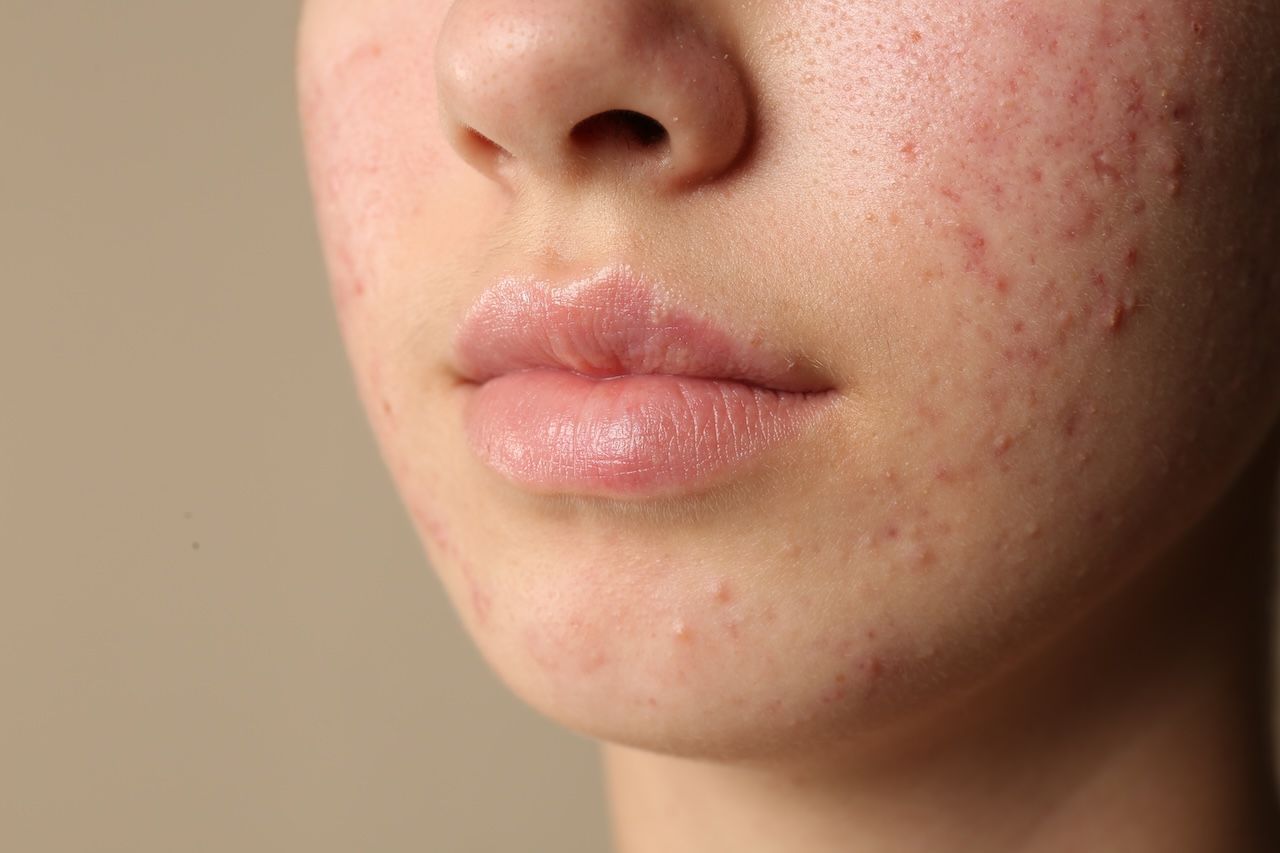
Clients often assume that anything in the lower-face area is hormonal, but breakouts around the mouth deserve their own look. This area is constantly exposed to products, and the skin is thin and more reactive than other zones.
POSSIBLE CONTRIBUTORS
- Lip products, makeup and occlusive skincare products
- Products transferring from hands throughout the day
- Shaving products
- Toothpaste
- Lipstick and lip balm—especially waxier, heavier formulations that migrate beyond the lip line
BETWEEN THE BROWS AND ON THE TEMPLES
Think about what's repeatedly contacting the area
These two zones are easy to overlook, but they each have distinct contributors worth investigating.
POSSIBLE CONTRIBUTORS FOR BETWEEN THE BROWS
- Hair products
- Makeup
- Oil accumulation
- Eyewear resting on the bridge of the nose
- Products used around the brow area (tinting, lamination)
POSSIBLE CONTRIBUTORS FOR TEMPLES
- Hair products and hairline contact
- Hats and headbands
- Headphones worn regularly
- Any repeated contact or friction in the area
MATCHING HOME CARE TO THE ACNE PATTERN
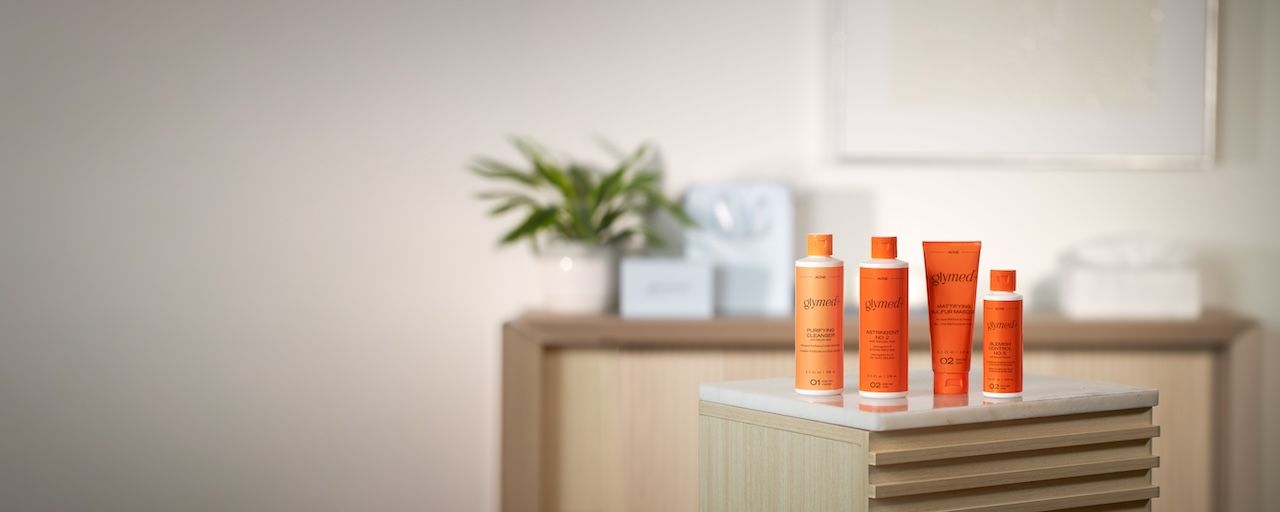
You don't need to build a completely different routine for each zone on the acne face map. In practice, you'd be managing a patchwork of conflicting actives, and your client's barrier would pay the price. Instead, use breakout location to identify possible triggers, then let lesion type, overall skin condition and tolerance guide the regimen.
A well-designed acne regimen addresses the follicular environment, manages oil and congestion, and keeps the skin barrier intact. Here's how key ingredients fit into that framework, along with GlyMed+ products to consider.
SALICYLIC ACID FOR PORE CONGESTION AND OIL
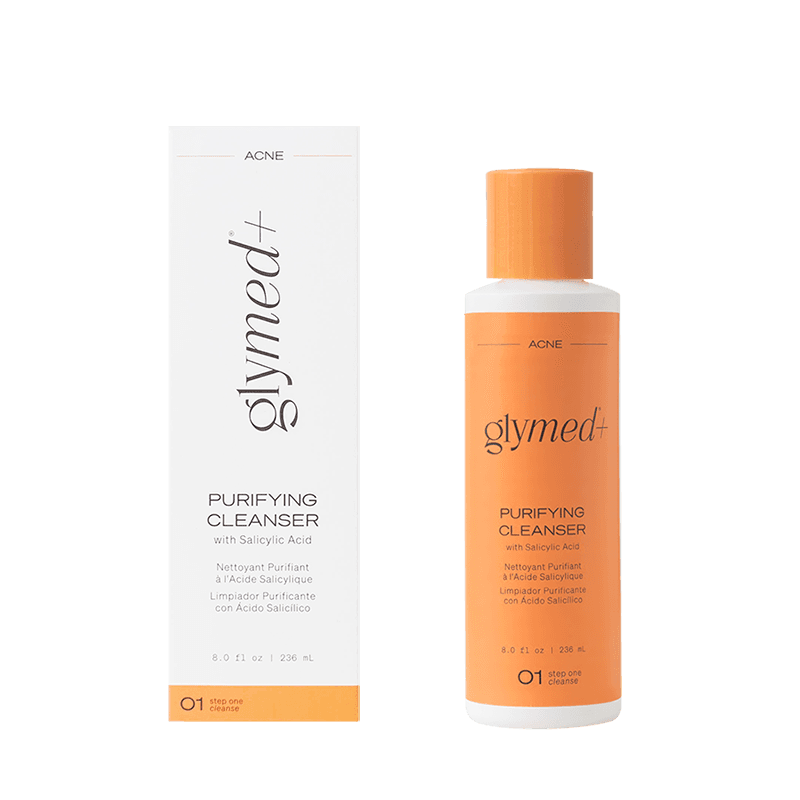
Salicylic Acid is one of your go-to ingredients when it comes to tackling congestion and oily skin. As a beta hydroxy acid (BHA), it's oil-soluble, which means it can work its way deep into the pore lining to dissolve excess sebum and dead skin cells right at the source.
It's an excellent choice for clients dealing with comedonal congestion or oily, acne-prone skin, especially those who tolerate active ingredients well.
GlyMed+ Recommendations
BENZOYL PEROXIDE FOR ACNE-CAUSING BACTERIA
Benzoyl Peroxide takes a different approach to tackling acne. Instead of exfoliating the surface, it introduces oxygen directly into the follicle, creating an environment where acne-causing bacteria (Cutibacterium acnes) can't survive.
As one of the most well-researched topical actives available, it's a trusted go-to for inflammatory acne, and when your clients use it consistently, the results really do speak for themselves.
GlyMed+ Recommendations
MANDELIC ACID FOR EXFOLIATING AND CONGESTION-FOCUSED REGIMENS
Mandelic Acid is a larger-molecule alpha hydroxy acid (AHA) derived from bitter almonds, and it's a fantastic addition to your treatment toolkit! Because of its larger molecular size, it penetrates more slowly, making it much better tolerated by sensitive or reactive skin types.
If you find that Salicylic Acid is too oil-stripping for some of your clients, Mandelic Acid is a brilliant alternative for congestion-focused regimens that still delivers real results.
GlyMed+ Recommendations
HYDRATION AND BARRIER-SUPPORTIVE PRODUCTS TO BALANCE ACTIVE INGREDIENTS
When your client's skin barrier is strong and healthy, active ingredients can do their best work. But when it's compromised, the skin becomes reactive and inflammation-prone and struggles to regulate oil. By incorporating barrier-supportive products into your treatment plans, you're setting every other product up for success.
GlyMed+ Recommendations
FREQUENTLY ASKED QUESTIONS
WHY DOES A CLIENT KEEP BREAKING OUT IN THE EXACT SAME SPOT?
Recurring breakouts in the same location usually point to a consistent, repeated trigger, not random chance. This could be a contact source (like a phone pressed to the cheek or a hair product near the hairline), a product ingredient that's clogging the pore or a hormonal pattern that predictably flares with cycle changes. Mapping when the breakout appears and what the area contacts regularly is a reliable place to start.
WHY MIGHT A CLIENT BREAK OUT ON ONLY ONE SIDE OF THE FACE?
One-sided breakouts are almost always contact-related. Consider which side your client sleeps on, which hand they use to rest their face, which side their phone contacts or whether their hair falls more heavily on one side. Asymmetrical acne is one of the strongest signals that something external—not internal—is driving the pattern.
CAN A CLIENT'S HAIR PRODUCTS CAUSE ACNE EVEN IF THEY NEVER APPLY THEM TO THE FACE?
Yes. Hair products transfer easily to the forehead, hairline, cheeks and temples through natural movement, sweat and pillowcase contact overnight. Pomades, oils and leave-in conditioners are particularly common contributors to comedonal acne in the hairline and forehead zones. Asking clients to explain their full hair care routine can reveal contributors to the acne face map that would otherwise be missed.
CAN OVER-EXFOLIATING CAUSE MORE ACNE-LIKE BREAKOUTS?
Yes, and it's more common than you'd think. When the skin barrier is disrupted by excess exfoliation, the skin becomes more reactive, more inflamed and less able to regulate itself normally. This can produce breakout-like congestion and sensitivity that mimics acne. If a client's skin seems to be getting worse despite consistent actives, assessing barrier health before adding more exfoliation is the right move.
TAKE YOUR ACNE KNOWLEDGE FURTHER WITH GLYMED+
The acne face map is a great conversation starter, but understanding how to act on what you observe is what sets skilled professionals apart. GlyMed's education platform offers specialty-based courses, certifications and protocols designed specifically for licensed professionals who want to go deeper into acne management and skin science.
If you're ready to build more confident acne protocols backed by clinical ingredients and professional-grade education, becoming a GlyMed+ Professional gives you access to both. Explore our full acne-focused product line and see what's possible when the right knowledge meets the right tools.
BECOME A GLYMED+ PROFESSIONAL
Like this content? Thousands of licensed skincare professionals have discovered the benefits of becoming a GlyMed+ Pro. Now's the time to join an elite group of estheticians dedicated to providing the best skincare services using the most effective products.
Click below to begin your GlyMed+ partnership and take your skincare business to new heights!
Become a ProSUPPORTING SKINCARE PROFESSIONALS
All GlyMed+ products are sold through licensed professionals to ensure product integrity and proper skincare instruction. As you work with a GlyMed+ Professional, you’ll receive personalized skincare treatments and home care regimens to help you achieve your skin goals.
Contact Your Local GlyMed+ ProFOLLOW US @GLYMEDPLUS
STAY CONNECTED
Enter your email to get the latest news, tips and deals straight to your inbox